Will this fit my car if the headrests don't move?
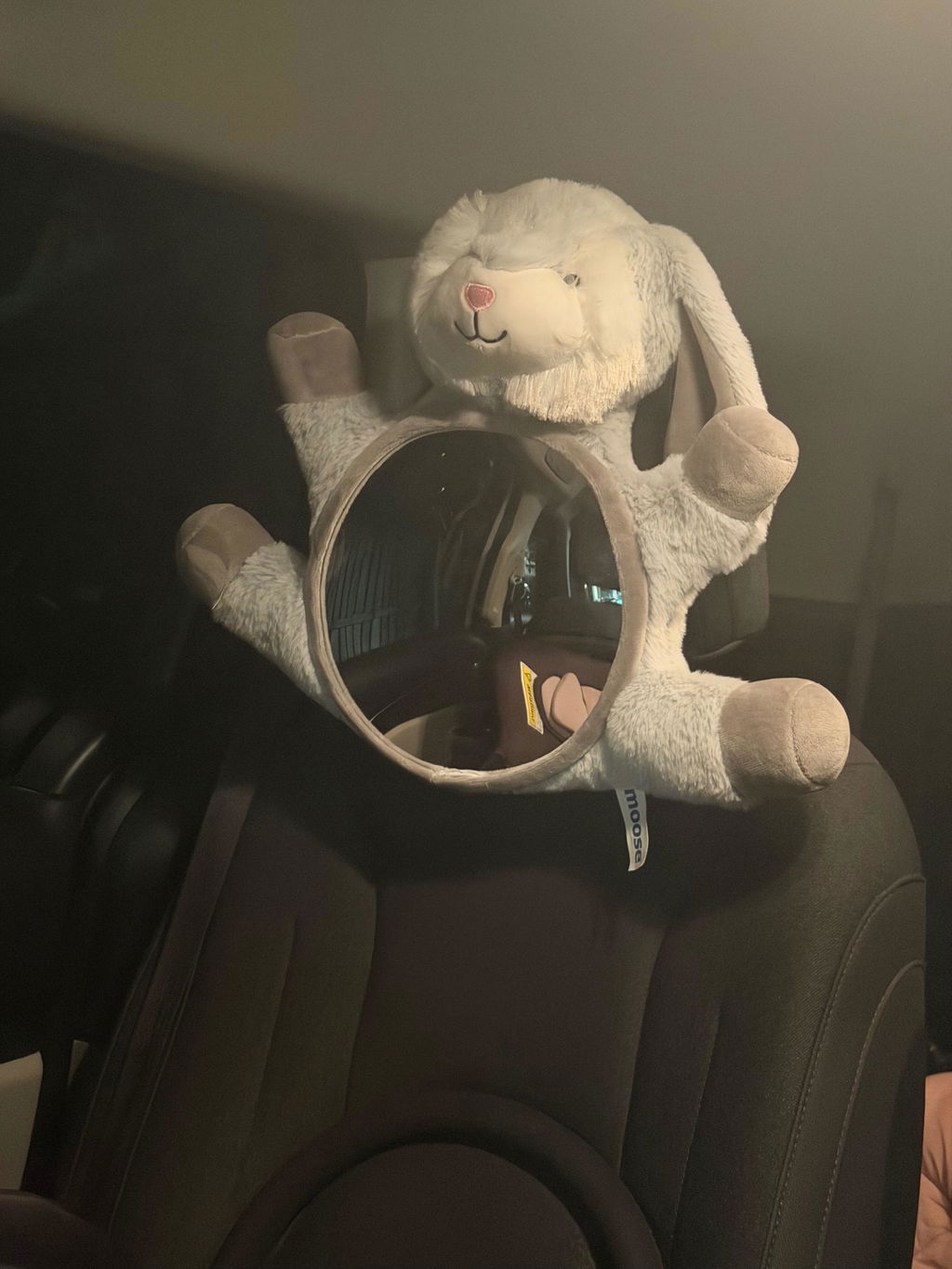
It depends on your seat. The Moose Baby-in-View Car Mirror is designed for rear seat headrests you can raise, where the beanbag hangs over the top and the lower strap feeds underneath and fastens with Velcro. If your headrests are moulded into the seat, the beanbag can still hang over the seat back and the weight will hold the mirror, but you will need to pin it to the seat to stop it shifting and a pin is not included.
How do I fit the mirror?
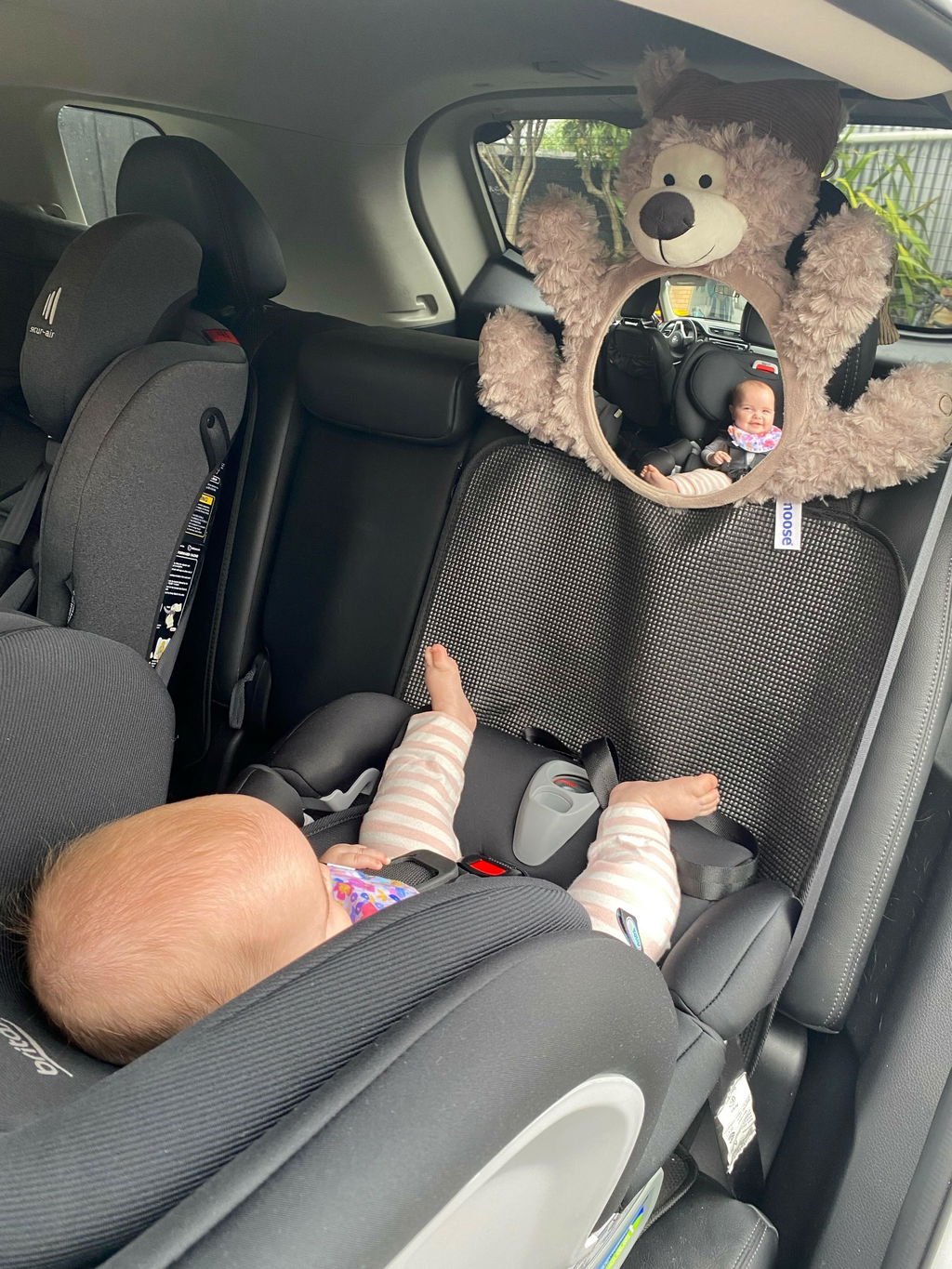
It takes about a minute and needs no tools. Hang the beanbag over the rear seat headrest, feed the lower strap underneath, and fasten the two straps together with the Velcro. Set the viewing angle while you are parked, with your baby in the seat, after you have adjusted your own rear view mirror to its normal driving position.
Will it stay still on bumpy roads?
Yes, and that is what the weight is for. Most car mirrors hang off a headrest and swing with the car, so the image shakes and the angle drifts until you cannot see anything useful. The beanbag base on the Moose Baby-in-View Car Mirror sits against the seat back and holds the mirror against that movement. Reviewers consistently name this as the difference from mirrors they have used before.
Are baby car mirrors safe?
A baby car mirror is safe when it is fitted so it cannot move and used as a glance rather than a watch. Two concerns come up and both are worth knowing. The first is that anything added to the back seat adds mass your car and car seat were not designed around, so a hard or heavy mirror can shift under crash forces. The Moose Baby-in-View Car Mirror is soft sided with a fabric beanbag base rather than a rigid frame. The second is distraction. Child passenger safety educators point out that a second with your eyes off the road is a real risk, and that a baby correctly harnessed in a correctly installed rear facing seat is safe whether or not you can see them. Set your angle before you drive, glance the way you would check your rear view mirror, and pull over if something needs sorting out.
What age can my baby use it from?
From birth, as long as they are in a rear facing car seat or capsule. Rear facing is what makes a mirror useful, because there is no other way to see your baby's face from the driver's seat. Newborns focus best at around 20 to 30cm, so early on they are looking at the plush animal rather than their reflection. Recognising themselves in the mirror comes later, usually well into the second year.
Can I still use it once my toddler is front-facing?
Yes. Once they turn around, hang the mirror on the back of the seat in front of them so they can see themselves and you can see them. Most car mirrors are finished the day the car seat turns. The Moose Baby-in-View Car Mirror keeps going, which is a large part of why it costs more than a basic mirror.
How big is the mirror and will I actually see their face?
The mirror surface on the Moose Baby-in-View Car Mirror is 20cm across and convex. Convex means it curves outward, which widens the field of view, so a single glance shows the whole face and the seat around it. Small flat mirrors are the most common reason parents end up seeing a knee or a sliver of forehead and buying a second mirror.
Can I move it between cars?
Yes, in under a minute, with no tools. Unfasten the Velcro strap, lift the beanbag off the headrest, and refit it in the other car the same way. Parents running two cars often buy a second one so nobody has to remember, but there is nothing stopping you swapping it.
Can I use it outside the car?
Yes. Babies are drawn to their own reflection and to faces, so the Moose Baby-in-View Car Mirror works as a tummy time mirror on the floor. Prop it against the beanbag base at your baby's eye level. It also works in the cot for supervised play.
Is it distracting to drive with?
That depends entirely on how you use it. A quick glance, in the same way you check your rear view mirror, is not a meaningful distraction. Watching your baby's face for several seconds at a time is. Set the angle before you pull out so you never adjust it in motion, and pull over if something needs attention rather than reaching back.